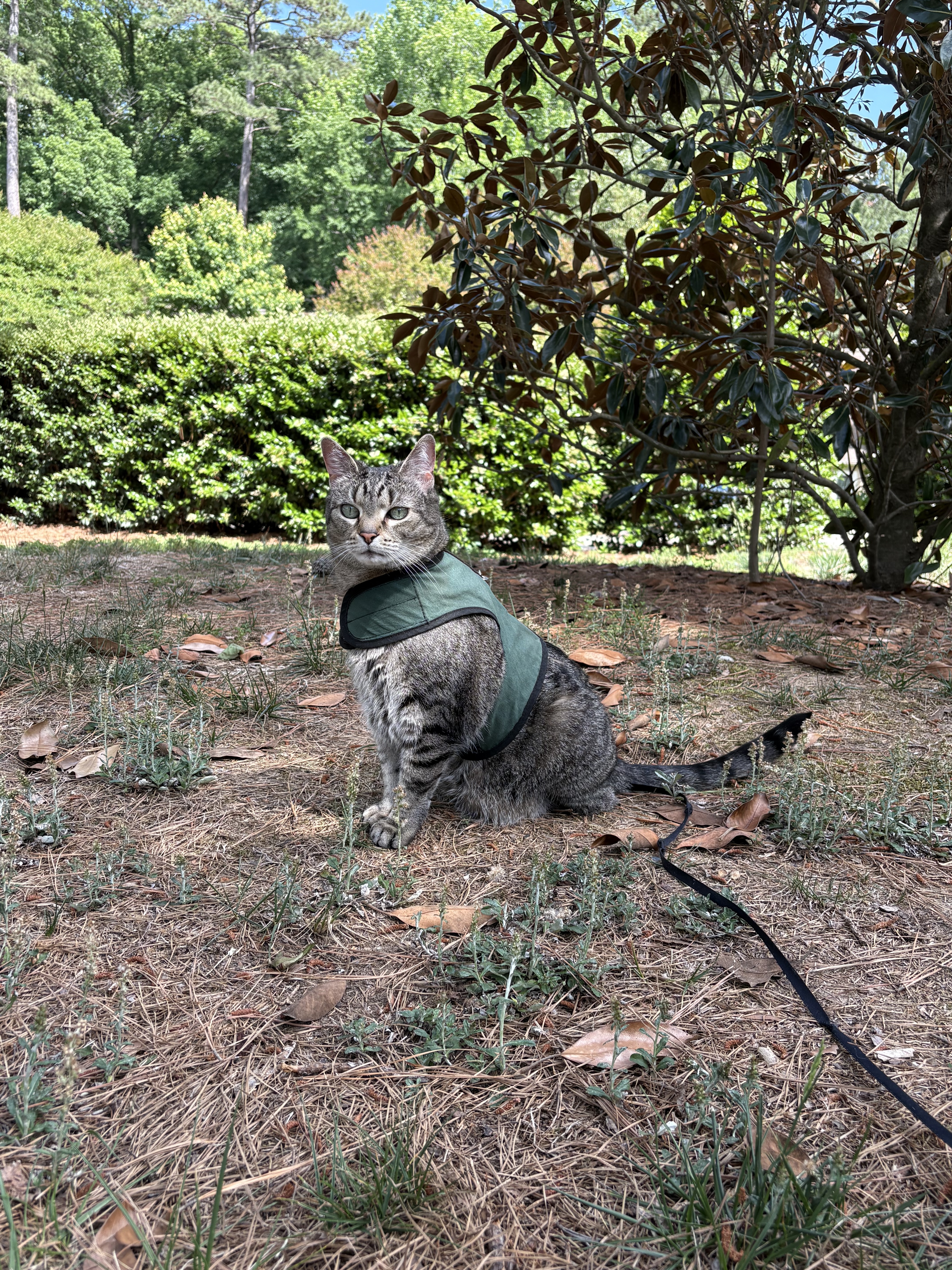
Photo by Sarah Singer
My Background
I am an Associate Professor of English at the University of Central Florida, where I teach introductory and upper-level courses on scientific and technical communication, collaborative writing, and the rhetorics of public debate. Some of my most important educational experiences occurred in the sadly defunct UMD CIVICUS Living and Learning Program and UNC HHIVE Lab. My goal as an educator is to cultivate similarly interactive environments in which students can strengthen their writing and critical thinking skills.
I earned my B.A. in English Language and Literature and Women, Gender, and Sexuality Studies from the University of Maryland, College Park and my Ph.D. in English and Comparative Literature from The University of North Carolina at Chapel Hill. As a patient-rhetorician, I examine how patients become entangled in medical power dynamics, misinformation, and decision fatigue—and what it would take to change that. My work has appeared in College English, Composition Forum, Rhetoric of Health and Medicine, Technical Communication Quarterly, Pedagogy, and POROI: Project on the Rhetoric of Inquiry. For more information, please see my CV or Google Scholar page.
Outside of work, you can find me strolling through the farmer’s market, experimenting with sourdough baking, or catching up on my book club’s latest selection. Whenever possible, I take Oriole the cat on walks and visit my niece and nephew.
My Work
At the intersection of technical communication, medical rhetoric, and disability studies, my research addresses a critical problem: the erosion of trust between patients with chronic, contested illnesses and their healthcare providers. While medical research often champions “patient empowerment”—encouraging patients to research and advocate for themselves—my work demonstrates how these strategies can backfire for those with invisible conditions like Chronic Lyme disease and Long COVID. Through a mixed-methods approach, I triangulate rhetorical analyses of medical literature, digital health platforms, and government documentation with patient interviews, narratives, and autoethnography.
In today’s global and digital world, issues of access, expertise, and usability are crucial to effective communication. As educators, we must lead by example and offer students opportunities to engage diverse sources in their research and writing; craft stylish and accessible compositions; and model inclusive workplace and pedagogical practices. Whether I am teaching rhetoric, composition, professional and technical communication, or medical/health humanities courses, I endeavor to foster an engaging learning environment for all students.
My Book
This work is exemplified in my monograph, The Patient Empowerment Paradox: Lyme Disease Rhetoric and Contested Health Literacies (University of South Carolina Press, 2026). Using my own story as a foundation, I argue that when patients with poorly understood conditions engage standard “patient empowerment” practices (doctor shopping for second opinions, developing advanced health literacy, etc.), they inadvertently disrupt patient-provider relationships and migrate toward medical misinformation. Paradoxically, despite their extensive efforts, these patients get sicker rather than healthier. This research offers a new framework for navigating medical uncertainty. By identifying why validated rhetorical moves fail in contested medical spaces, my work provides scholars and practitioners with the tools to mitigate conflicts and move toward more collaborative, effective care. This framework is vital not only for the Lyme community, but it is also urgently scalable to the millions of patients currently navigating Long COVID and other conditions with ambiguous symptoms and confusing diagnostic processes. Order your of The Patient Empowerment Paradox here! Use the code JSAVE20 for a 20% discount.
Selections from The Patient Empowerment Paradox appear in College English (2019) and Peitho (2019) and won the 2019 Judy Segal Top Paper Award from the Rhetoric of Health and Medicine Symposium. Additionally, the project was one of UCF’s two National Endowment for the Humanities (NEH) Summer Stipend Award nominees in 2023. David Scales of Weill Cornell Medicine and co-author of the recent National Academies of Science Report, “Understanding and Addressing Misinformation about Science,” described the monograph as “a nuanced, essential portrait of chronic illness in America.”
My Next Project
In a world where patients are disempowered, how can they fight back? Because medicine is a field in which expertise is central, fellow healthcare providers have the greatest potential to overcome communication barriers for conditions without visible symptoms or medical tests.
To address this challenge, I am working on a second monograph, The Provider Empowerment Paradox: Doing No Harm in the Age of Self-Diagnosis. It was funded in part by a 2021 UCF Exploratory Research seed grant. Drawing on survey data, interviews, and published illness narratives, I examine how healthcare providers draw on the art of persuasion to get the care they need.

